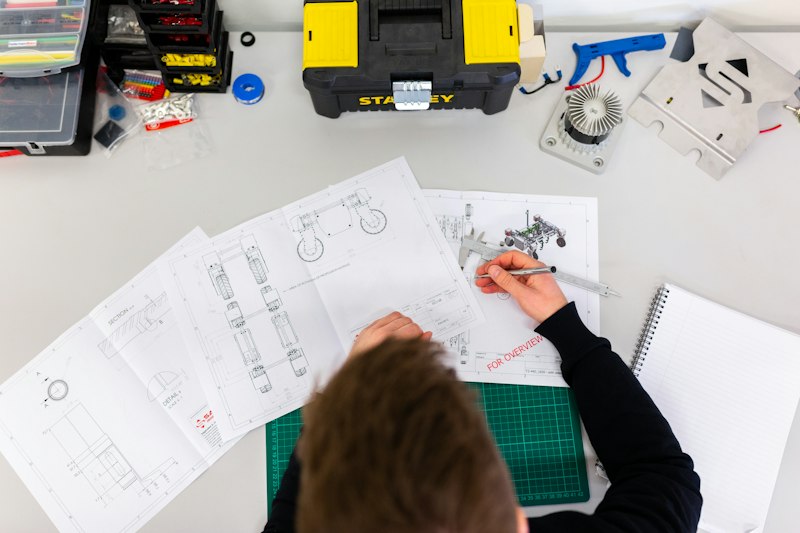
What Are European Apprenticeships?
Europe has a long tradition of apprenticeship training, particularly in Germany, Austria, Switzerland, and Scandinavia. These programs combine on-the-job training with classroom learning, allowing workers to earn a recognized vocational qualification while getting paid. For South Asian workers, apprenticeships represent an exceptional opportunity to upskill and transform from an unskilled worker into a qualified professional.
How Apprenticeships Work
- Duration: Typically 2 to 3 years
- Structure: 3 to 4 days per week working at the employer, 1 to 2 days per week at a vocational school
- Pay: You earn a salary during the apprenticeship, starting lower than a regular worker but increasing each year
- Qualification: Upon completion, you receive a nationally recognized vocational certificate
- Language requirement: Basic to intermediate level of the local language is usually required
Countries with Strong Apprenticeship Systems
Germany (Dual System)
Germany's apprenticeship system is world-famous. Over 300 recognized trades from CNC machine operation to electrical installation are available. After completing an apprenticeship, your salary typically increases by 30 to 50 percent. The qualification is recognized across all EU countries.
Austria
Similar to the German system. Strong in manufacturing, hospitality, and technical trades. Apprentices are well-paid and the social status of vocational workers is high.
Denmark
Danish apprenticeships pay some of the highest apprentice wages in Europe. The system is flexible and accessible to foreign workers with basic Danish language skills.
Eligibility for Foreign Workers
Most apprenticeship programs are open to foreign workers if you meet these criteria:
- Valid work permit in the country
- Basic proficiency in the local language (A2 to B1 level)
- Employer willing to sponsor your apprenticeship
- Minimum age of 18 (no upper age limit in most countries)
How to Get Started
- Start learning the local language as soon as you arrive (many cities offer free courses)
- Express your interest in an apprenticeship to your employer
- Ask CHI Recruiting about employers who offer apprenticeship pathways
- Research available programs through national employment agencies
Return on Investment
Completing a European apprenticeship transforms your career prospects globally. A German vocational certificate, for example, is recognized and respected worldwide. It opens doors to higher-paying positions, team leader roles, and even self-employment.
Contact us to explore apprenticeship opportunities alongside your factory placement.
What this guide covers
This guide focuses on European Apprenticeship Programs: Opportunities for Foreign Workers to Upskill. Discover how European apprenticeship and vocational training programs can help South Asian workers gain valuable skills and increase their earning potential. The sections below translate that framing into concrete steps, common mistakes from workers who walked this path before you, and a checklist you can run through in one sitting before deciding on next moves.
Why this matters now
A Europe career path looks different from a domestic one — different visa rules, different employer expectations, different signals on a CV. The advice below maps to how European recruiters and supervisors actually evaluate workers from outside the EU.
The Europe-wide context
Across our placement network — currently 13 European countries spanning from Denmark in the north to Albania and Montenegro on the Adriatic — the underlying pattern for international blue-collar workers is consistent: 12-month entry contracts, accommodation typically included, salaries from €1,500 to €4,300/month depending on country and sector, with renewal and residency milestones aligned to a 5-year arc.
What varies most across countries is processing speed (Poland and Serbia among the fastest at 4-6 weeks; Italy and Vietnam-origin applications among the slowest at 12-16), cost of living (Bulgaria and Albania among the lowest; Denmark and France among the highest), and the path to permanent residency (clear and well-supported in Germany, Denmark, Czech Republic; less defined in non-EU destinations like Turkey).
Step-by-step breakdown
- Step 1. Define your 24-month and 60-month goal before signing the first contract — savings target, residency target, and family reunification target.
- Step 2. Pick a sector with year-round demand and renewable contracts; avoid sectors with seasonal dips unless you are willing to spend the off-season unpaid.
- Step 3. Prioritise employers known for renewing contracts and processing residency-step paperwork on time. Reputation matters more than a slightly higher hourly rate.
- Step 4. Document your work meticulously: payslips, performance feedback, supervisor references. These compound into your year-3 leverage.
- Step 5. Re-evaluate at month 18. Either renew with the current employer at a higher tier, switch to a stronger employer in the same sector, or relocate within Europe to a higher-paying country.
Common pitfalls and how to avoid them
- Sending money home aggressively in the first 6 months without first building a 2-month European emergency fund. A single missed paycheck (employer payroll glitch, contract gap) without that fund forces high-interest borrowing.
- Failing to keep payslips, contracts, and residency-card photocopies in a single folder. Every renewal asks for these — and embassies are unforgiving about missing months.
- Ignoring language fundamentals because the workplace runs on English or pictograms. Six months of free or cheap on-site classes pays back tenfold when residency interviews, doctor visits and tenancy negotiations come up.
- Treating the first European job as the destination rather than a stepping stone. Renewals, residency clocks and family reunification all depend on continuous employment, but the smart move at year 2 is often switching to a higher-tier employer in the same sector, not staying put for ten years.
Frequently asked questions
Can I switch employers within 1 year?
Most work permits are tied to a specific employer. Switching usually requires either employer-to-employer transfer (with both employers cooperating) or a new permit application from scratch. Best to commit to the first contract for 12 months unless conditions are clearly bad-faith.
What if my contract is not renewed?
You typically have 30-90 days to find a new employer or arrange return. CHI Recruiting helps reposition workers with our partner employer network when contracts close — but advance notice (60+ days before contract end) makes this much smoother.
Will my home-country qualifications be recognised?
For factory, warehouse, food processing, hospitality and construction roles — no formal recognition is required. For skilled trades (electrician, welder, nurse), recognition processes (Germany ZAB, France ENIC-NARIC) take 3-6 months and are worth starting in parallel with your first job.
How long before I should ask for a raise?
In most European blue-collar contracts, raises are tied to contract renewal cycles or to the national/sector wage council, not individual negotiation. Workers asking for off-cycle raises are typically referred back to the next review cycle. Building leverage through skills certifications and supervisor references pays off more than direct asks.
Should I learn the local language or stay in English?
For year 1, English is enough on most factory floors. For year 2 onward, conversational local language unlocks promotions, residency interviews, healthcare access, and integration. Free or cheap on-site classes pay back tenfold over a 5-year horizon.
Action checklist
- Document every payslip and performance review
- Track residency clock and family-reunification window
- Re-evaluate sector and employer at month 18
- Define 24-month and 60-month goals
- Build supervisor references for the year-2 transition
Resources to bookmark
- Official immigration portals — every EU country publishes its work-permit guidance in English. Bookmark the official portal for your destination (e.g. diplo.de for Germany, nyidanmark.dk for Denmark, gov.pl for Poland) and check it once a month for rule changes.
- Sector wage councils — Germany's Mindestlohnkommission, Denmark's sector unions, Poland's national wage announcements. These move 6 months ahead of what employers actually pay.
- Eurostat labour statistics — quarterly releases on employment, vacancy rates, and average wages by sector. Useful for sense-checking employer claims.
- CHI Recruiting blog — country-by-country guides, sector-specific salary research, and updates on visa quota changes from your home country.
- Worker community groups — Telegram, WhatsApp and Facebook groups by country and source-country. Look for those moderated by long-term residents, not recruitment agencies posing as community.
Glossary of terms you will see
- Type D visa — long-stay national visa used by most EU countries to admit non-EU workers. Tied to a specific employer and job.
- Single permit — combined work and residence permit issued in countries like Czech Republic, Slovakia, Croatia. Simplifies the paper chain.
- Blue Card — EU-wide highly-skilled worker permit. Mostly relevant for university-educated roles, not blue-collar.
- Anmeldung / soggiorno / TRP — local residency registration that must happen within a fixed window (often 14 days) after arrival.
- IBAN — international bank account number; required by most employers before first paycheck.
- Mindestlohn / minimum wage — country-set floor that defines the lower bound on legal pay. Updated yearly.
- Apostille — international certification that authenticates documents (education, police, marriage). Most EU countries now accept it instead of the older consular legalisation chain.
Related guides
- European Libraries and Free Learning Resources for Foreign Workers
- European Holidays and Time Off Policies: What International Workers Should Expect
- Understanding Contract Renewals and Extensions in European Employment
- Forklift License in Europe: How to Get Certified and Earn More
Looking for a specific role aligned with this guide? Browse open positions at CHI Recruiting — every job page lists the country-specific salary, contract length, and onboarding details so you can match this guide to live opportunities. Reference: BLOG-EUROPEAN-APPRENTICESHIP-.