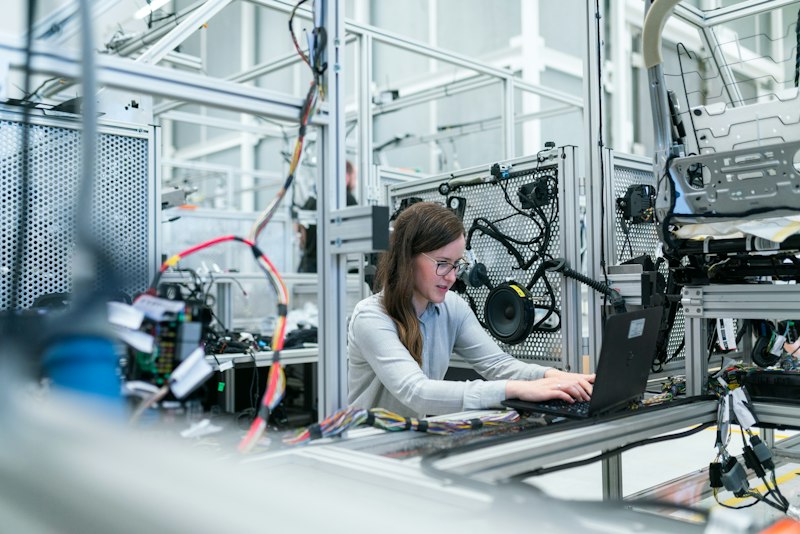
Manufacturing in Europe Is Growing, Not Shrinking
Despite predictions that manufacturing would move entirely to Asia, the opposite is happening. European manufacturers are reshoring production, building new factories, and investing in advanced manufacturing. For South Asian workers, this means increasing demand for labor across the continent through at least 2030.
Key Trends Shaping the Future
- Reshoring and nearshoring: Supply chain disruptions during the pandemic taught European companies that manufacturing closer to home reduces risk. Factories that moved to China are now returning to Central and Eastern Europe.
- Green manufacturing: The EU's Green Deal is driving massive investment in clean technology, renewable energy equipment, and sustainable production processes.
- Digitalization: Industry 4.0 technologies — IoT sensors, digital twins, AI-powered quality control — are transforming factories but creating more jobs than they eliminate.
- Aging workforce: Europe's population is aging rapidly. There simply are not enough young Europeans entering manufacturing to replace retiring workers.
Industries with the Strongest Growth
Electric Vehicle and Battery Manufacturing
Europe needs an estimated 800,000 new workers in the EV supply chain by 2030. Gigafactories are being built in Germany, Sweden, Hungary, Poland, France, and Spain.
Renewable Energy Equipment
Wind turbine manufacturing, solar panel production, and heat pump assembly are booming sectors. Denmark, Germany, and Spain lead this growth.
Semiconductor Manufacturing
The EU Chips Act is bringing semiconductor fabrication back to Europe. Intel, TSMC, and others are building multi-billion-euro facilities that will need thousands of workers.
Defense Manufacturing
Increased defense spending across Europe is expanding ammunition, vehicle, and equipment production. This sector offers stable, well-paying positions.
What This Means for South Asian Workers
The labor shortage in European manufacturing is structural and long-term. Key implications:
- Job security: Demand for manufacturing workers will remain strong for at least the next decade
- Rising wages: Competition for workers is pushing salaries higher across Europe
- Better conditions: Employers are improving accommodation, benefits, and support services to attract and retain international workers
- Skills premium: Workers who gain experience in EV, renewable energy, or semiconductor manufacturing will be highly valued
Now is the perfect time to start your European manufacturing career. Browse open positions in the fastest-growing sectors.
What this guide covers
This guide focuses on The Future of Manufacturing Jobs in Europe: Trends for 2026 to 2030. What the next five years hold for factory and manufacturing workers in Europe — from reshoring to green manufacturing and digital transformation. The sections below translate that framing into concrete steps, common mistakes from workers who walked this path before you, and a checklist you can run through in one sitting before deciding on next moves.
Why this matters now
European labour markets shift quarterly — new VW plant in Slovakia, Tyson factory expansion in Denmark, EU directive on temporary work permits. Workers who track these signals position themselves a quarter ahead of the wave. The sections below explain what to watch.
The Europe-wide context
Across our placement network — currently 13 European countries spanning from Denmark in the north to Albania and Montenegro on the Adriatic — the underlying pattern for international blue-collar workers is consistent: 12-month entry contracts, accommodation typically included, salaries from €1,500 to €4,300/month depending on country and sector, with renewal and residency milestones aligned to a 5-year arc.
What varies most across countries is processing speed (Poland and Serbia among the fastest at 4-6 weeks; Italy and Vietnam-origin applications among the slowest at 12-16), cost of living (Bulgaria and Albania among the lowest; Denmark and France among the highest), and the path to permanent residency (clear and well-supported in Germany, Denmark, Czech Republic; less defined in non-EU destinations like Turkey).
What this sector looks like in practice
This sector's daily reality is centred on production line operation, machine monitoring, visual quality inspection. Standard schedule is 3-shift rotation (morning, afternoon, night). Onboarding training runs 2-4 weeks, after which the worker is expected to operate independently with periodic supervision. Pay range across the partnership network falls within €1,500-3,300/month, depending on country, employer size and contract length.
Sector-specific requirements apply to safety equipment, hygiene rules, and shift-handover protocols. These are documented in the contract and reinforced during onboarding — most workers reach full productivity within 4-6 weeks even without prior sector experience.
Step-by-step breakdown
- Step 1. Identify 3 reliable signal sources for your sector — typically a national wage council, a trade union site, and a sector-specific newsletter.
- Step 2. Track quarterly: minimum wage updates, visa quota announcements, employer-of-record expansions in your sector.
- Step 3. Translate news to action: if a country raises minimum wage, your sector will follow within 6 months; if a quota tightens, applications need to move 4-6 weeks earlier than usual.
- Step 4. Maintain a 12-month rolling view, not a daily one. Most labour market signals only become actionable at the quarter horizon.
Common pitfalls and how to avoid them
- Missing seasonal pay-rate changes that are usually announced quarterly by national wage councils (Germany Mindestlohnkommission, Denmark sector unions, Poland minimum-wage updates). These propagate to all employers within 6 months.
- Confusing "EU-wide" news with country-specific reality. Each member state implements EU directives differently; what changes for Germany may not change for Poland for another 18 months.
- Believing "labour shortage" headlines without checking the specific roles. Shortages are usually concentrated in 2-3 sectors per country; if your sector is not on the list, the shortage does not increase your bargaining power.
- Reacting to news headlines rather than the underlying labour-market signal. A single VW factory announcement does not move the German labour market the way EU directives or country-wide visa quota changes do.
Frequently asked questions
Where do I get reliable European labour-market news?
National wage councils (e.g. Germany Mindestlohnkommission), trade unions (Denmark sector unions, Italy CGIL), Eurostat releases, and CHI Recruiting's sector newsletters cover the actionable updates without the noise.
Which sectors are growing fastest right now?
Renewable energy (Denmark, Germany, France), warehouse logistics (Germany, Poland, Czech Republic), food processing (Denmark, Italy, Bulgaria) are the consistent growth sectors of the past two years. Automotive is steady but capex-cyclical.
Does an EU directive automatically apply to my country?
No — directives must be transposed into national law, which can take 12-24 months. Watch for the national implementation announcement, not the EU-level one.
Why should a factory worker care about industry news?
Because labour-market signals (minimum-wage rises, visa quota changes, sector-specific shortages) compound into pay-rate changes 3-6 months later. Tracking them positions you a quarter ahead of the average worker.
How often do minimum wages change in the EU?
Most EU countries adjust minimum wage once or twice per year, typically January and July. Sector-specific rates (construction in Germany, hospitality in Italy) often move on different cycles.
Action checklist
- Track quarterly: wage updates, visa quotas, employer expansions
- Translate news to action within 4-6 weeks
- Avoid daily-noise sites; prefer quarterly summaries
- Subscribe to 3 reliable signal sources
Resources to bookmark
- Official immigration portals — every EU country publishes its work-permit guidance in English. Bookmark the official portal for your destination (e.g. diplo.de for Germany, nyidanmark.dk for Denmark, gov.pl for Poland) and check it once a month for rule changes.
- Sector wage councils — Germany's Mindestlohnkommission, Denmark's sector unions, Poland's national wage announcements. These move 6 months ahead of what employers actually pay.
- Eurostat labour statistics — quarterly releases on employment, vacancy rates, and average wages by sector. Useful for sense-checking employer claims.
- CHI Recruiting blog — country-by-country guides, sector-specific salary research, and updates on visa quota changes from your home country.
- Worker community groups — Telegram, WhatsApp and Facebook groups by country and source-country. Look for those moderated by long-term residents, not recruitment agencies posing as community.
Glossary of terms you will see
- Type D visa — long-stay national visa used by most EU countries to admit non-EU workers. Tied to a specific employer and job.
- Single permit — combined work and residence permit issued in countries like Czech Republic, Slovakia, Croatia. Simplifies the paper chain.
- Blue Card — EU-wide highly-skilled worker permit. Mostly relevant for university-educated roles, not blue-collar.
- Anmeldung / soggiorno / TRP — local residency registration that must happen within a fixed window (often 14 days) after arrival.
- IBAN — international bank account number; required by most employers before first paycheck.
- Mindestlohn / minimum wage — country-set floor that defines the lower bound on legal pay. Updated yearly.
- Apostille — international certification that authenticates documents (education, police, marriage). Most EU countries now accept it instead of the older consular legalisation chain.
Related guides
- Factory & Production Jobs in Europe: What to Expect
- Food Processing Jobs in Europe: From Farm to Factory
- Renewable Energy Jobs in Europe: Wind, Solar, and Green Hydrogen Opportunities
- Pharmaceutical Industry Jobs in Europe: Clean Room Careers
Looking for a specific role aligned with this guide? Browse open positions at CHI Recruiting — every job page lists the country-specific salary, contract length, and onboarding details so you can match this guide to live opportunities. Reference: BLOG-FUTURE-MANUFACTURING-JOB.