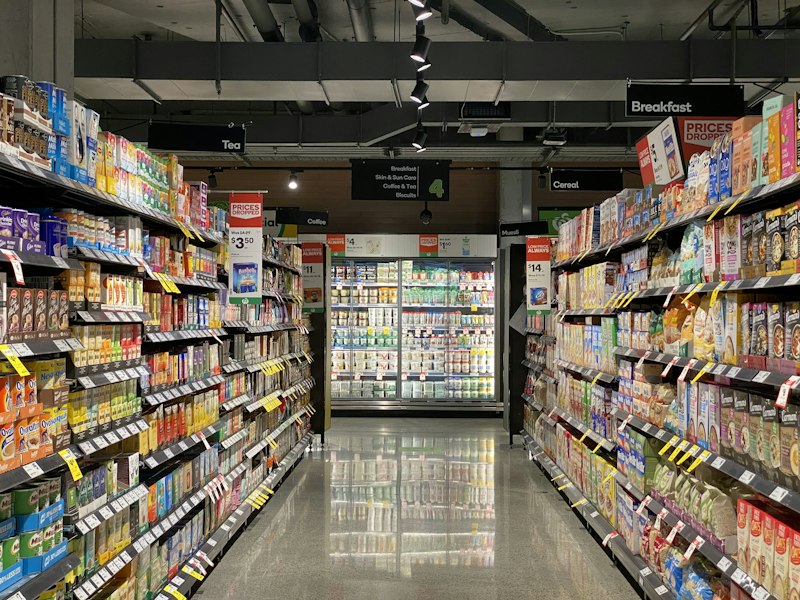
Navigating European Supermarkets for the First Time
Walking into a European supermarket for the first time can be confusing. The layout, labeling, and products are different from what you know back home. This guide will help you understand the major supermarket chains, find the best deals, and locate familiar ingredients for your favorite South Asian dishes.
Discount Supermarkets: Your Best Friends
Aldi and Lidl are the two largest discount supermarket chains in Europe, and they are where most workers do their weekly shopping:
- Aldi — Present in Germany, Poland, UK, Ireland, and expanding. Known for extremely low prices and a no-frills shopping experience. Their own-brand products are high quality at budget prices.
- Lidl — Found across almost all European countries. Slightly wider product range than Aldi, with a popular bakery section. Weekly theme promotions offer great value on non-food items.
- Biedronka — Poland's leading discount chain. Very affordable with frequent promotions. Labels are in Polish only.
- Penny — Common in Germany, Czech Republic, and Romania. Good for basics at low prices.
Mid-Range Supermarkets
- Tesco — UK, Ireland, Czech Republic, Slovakia, and Hungary. Wide selection including an international foods aisle that often carries South Asian products.
- Carrefour — France, Spain, Poland, Romania, Belgium, and Italy. Large hypermarkets with extensive product ranges including halal sections in many stores.
- Albert Heijn — The Netherlands' primary supermarket. Good quality but higher prices.
- Kaufland — Germany, Czech Republic, Poland, Romania. Large stores with competitive pricing.
How to Save Money on Groceries
- Shop at Aldi or Lidl for staples like rice, oil, flour, and vegetables.
- Buy in bulk at the beginning of the month — share costs with housemates.
- Check for yellow-sticker reduced items near closing time.
- Download store apps for digital coupons (Lidl Plus is excellent).
- Buy seasonal fruits and vegetables — they are cheapest and freshest.
- Avoid pre-packaged or ready meals — cooking from scratch saves 50-70% on food costs.
Finding South Asian Ingredients
Most European cities have Asian grocery stores where you can find basmati rice, dal, spices, ghee, paneer, and fresh green chilies. Search Google Maps for "Asian supermarket" or "Indian grocery" near your location. Larger Tesco and Carrefour stores also stock basic South Asian ingredients in their international aisles.
Browse our blog for more tips on living and working in Europe, or check open positions to start your journey.
What this guide covers
This guide focuses on Guide to European Supermarkets: Aldi, Lidl, Tesco, Carrefour and More. A practical guide to shopping at European supermarkets, comparing prices, product ranges, and tips for finding affordable groceries as a foreign worker. The sections below translate that framing into concrete steps, common mistakes from workers who walked this path before you, and a checklist you can run through in one sitting before deciding on next moves.
Why this matters now
Moving to Europe is logistically simple in theory: passport, visa, plane ticket. In practice the first 30 days decide whether you settle in cleanly or burn savings on avoidable mistakes. Below is a calmer, more concrete map.
The Europe-wide context
Across our placement network — currently 13 European countries spanning from Denmark in the north to Albania and Montenegro on the Adriatic — the underlying pattern for international blue-collar workers is consistent: 12-month entry contracts, accommodation typically included, salaries from €1,500 to €4,300/month depending on country and sector, with renewal and residency milestones aligned to a 5-year arc.
What varies most across countries is processing speed (Poland and Serbia among the fastest at 4-6 weeks; Italy and Vietnam-origin applications among the slowest at 12-16), cost of living (Bulgaria and Albania among the lowest; Denmark and France among the highest), and the path to permanent residency (clear and well-supported in Germany, Denmark, Czech Republic; less defined in non-EU destinations like Turkey).
Step-by-step breakdown
- Step 1. Two weeks before departure: confirm passport validity (18+ months recommended), print all documents in duplicate, pack a 7-day clothing kit appropriate to the destination season.
- Step 2. Day of arrival: keep cash to cover 7 days, transit pass, charged phone with destination SIM ready, and the employer or recruiter's emergency contact saved.
- Step 3. Days 1-3: register at the local residency office, open a bank account (most employers require an IBAN before first paycheck), set up healthcare registration where applicable.
- Step 4. Days 4-14: apply for tax number, local mobile contract, residency card. Forward your home-country mail to a trusted contact who can scan and send.
- Step 5. Days 15-30: build local reference points — a doctor, a grocery store, a transport route, a community centre. The first 30 days set the next 12 months' rhythm.
Common pitfalls and how to avoid them
- Bringing too much cash. Most EU countries require declaration above €10,000 and getting a local IBAN within the first 14 days makes everything from rent to phone contracts to employer reimbursements smoother.
- Underestimating winter clothing costs in Northern Europe. Workers from Pakistan, Bangladesh, India and parts of Africa frequently arrive in October without thermals or insulated boots and lose €200-400 in the first cold week.
- Skipping mandatory healthcare registration in the first month assuming the employer handles it. Some do; many don't until you ask.
- Booking a one-way ticket without confirming the residency-registration deadline (Anmeldung in Germany, soggiorno in Italy, registracja in Poland). These deadlines start ticking on arrival day, not on contract day.
Frequently asked questions
Will my employer pick me up at the airport?
Many partner employers do — especially for first-time international workers — and CHI Recruiting confirms this in advance. If not, the recruiter provides written instructions for the airport-to-accommodation transfer (train, taxi, prepaid bus).
How quickly can I bring my family?
Family reunification typically requires 12-24 months of continuous employment plus proof of housing capacity. Some countries (Denmark, Germany) move faster than others (Italy, France) on processing.
What about driving — can I use my home-country license?
In the EU, most non-EU licenses are valid for 6 months from arrival, after which you need an EU license. Many workers do not need a car (employer-provided shuttle or public transport handle the commute), but plan ahead if your role requires driving.
How much money should I bring on day one?
Cash equivalent to €500-800 for the first 14 days (transit, food, basic SIM). More than €10,000 must be declared at EU borders. Most expenses can be paid by card once your local bank account opens (typically within the first 7 days).
Do I need to bring my own bedding/cookware?
Most employer-provided accommodation comes furnished with bed, bedding, basic kitchen, washing machine. Personal items (toiletries, prayer mat, small electronics with EU plug adapter) are worth packing.
Action checklist
- Pack a 7-day kit appropriate to destination weather
- Bring €500-800 in cash for first 14 days
- Schedule residency registration within 14 days of arrival
- Open local bank account in week 1
- Confirm passport 18+ months valid
Resources to bookmark
- Official immigration portals — every EU country publishes its work-permit guidance in English. Bookmark the official portal for your destination (e.g. diplo.de for Germany, nyidanmark.dk for Denmark, gov.pl for Poland) and check it once a month for rule changes.
- Sector wage councils — Germany's Mindestlohnkommission, Denmark's sector unions, Poland's national wage announcements. These move 6 months ahead of what employers actually pay.
- Eurostat labour statistics — quarterly releases on employment, vacancy rates, and average wages by sector. Useful for sense-checking employer claims.
- CHI Recruiting blog — country-by-country guides, sector-specific salary research, and updates on visa quota changes from your home country.
- Worker community groups — Telegram, WhatsApp and Facebook groups by country and source-country. Look for those moderated by long-term residents, not recruitment agencies posing as community.
Glossary of terms you will see
- Type D visa — long-stay national visa used by most EU countries to admit non-EU workers. Tied to a specific employer and job.
- Single permit — combined work and residence permit issued in countries like Czech Republic, Slovakia, Croatia. Simplifies the paper chain.
- Blue Card — EU-wide highly-skilled worker permit. Mostly relevant for university-educated roles, not blue-collar.
- Anmeldung / soggiorno / TRP — local residency registration that must happen within a fixed window (often 14 days) after arrival.
- IBAN — international bank account number; required by most employers before first paycheck.
- Mindestlohn / minimum wage — country-set floor that defines the lower bound on legal pay. Updated yearly.
- Apostille — international certification that authenticates documents (education, police, marriage). Most EU countries now accept it instead of the older consular legalisation chain.
Related guides
- Understanding European Rental Markets: A Country-by-Country Guide for Foreign Workers
- Grocery Shopping in Europe on a Budget: A Guide for South Asian Workers
- Understanding European Tipping Culture: A Guide for Foreign Workers
- Public Transport Guide for Workers in Europe: Getting Around Without a Car
Looking for a specific role aligned with this guide? Browse open positions at CHI Recruiting — every job page lists the country-specific salary, contract length, and onboarding details so you can match this guide to live opportunities. Reference: BLOG-GUIDE-EUROPEAN-SUPERMARK.